

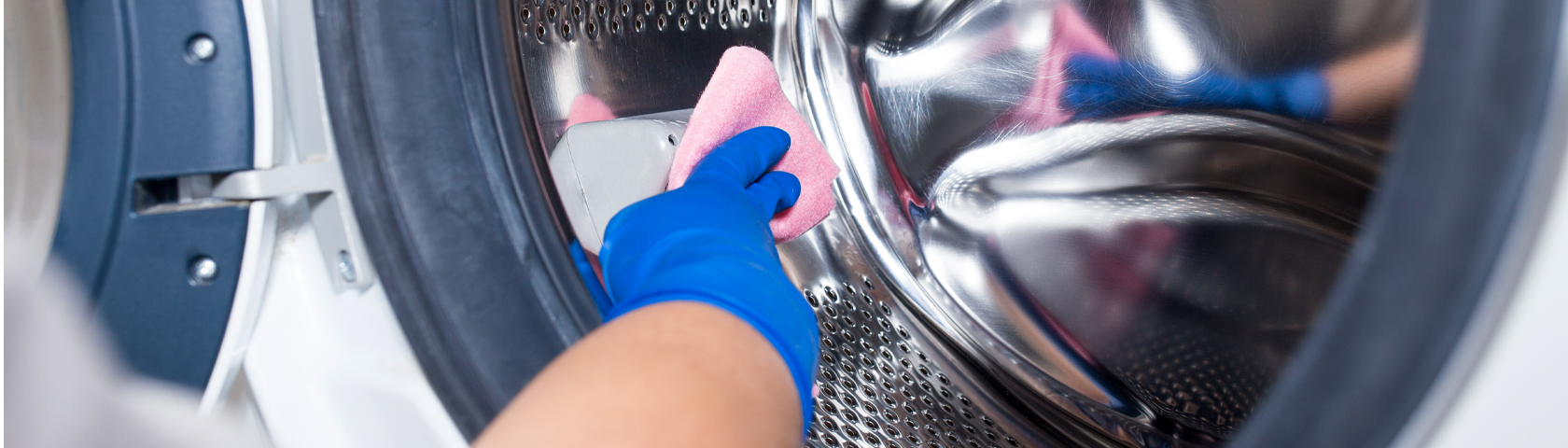
Is your laundry room getting a little musty? A little stinky, making you say “what’s that smell?” every time you walk past? There’s a simple solution for your smelly problem; your machine needs a cleaning of its own. While some may believe washing machines self clean during normal loads, that’s not the case.
Your machine is putting in work dealing with dirty messes. All this work can cause limescale, mold, and soap scum to build up and cause issues. Detergent residue and minerals don’t always rinse away and can build up inside your machine, and clothing fibers can get caught too. It’s best to clean your machine regularly before a stinky issue becomes an expensive repair down the line.
Cleaning a washing machine is easy. Here’s what you’ll need:
- Cleaning cloths
- White vinegar
- Baking soda
- Bleach/hydrogen peroxide
Start simple
Before diving into a deep clean for your washing machine, we always recommend a surface clean using a cloth and a one-to-one ratio mix of vinegar and water. Wipe down the door, surfaces, and especially the rubber seal if you have a front-loader (also consider using hydrogen peroxide or chlorine bleach to help kill bacteria, which often gets trapped on the rubber seal).
If you can’t get into all the nooks and crannies of your machine, try busting out a toothbrush (or similar cleaning device) to really get everything clean.
Have a front-load washing machine? Here’s what to do next.
The big thing for front-loading washing machines is cleaning the rubber seal that we mentioned before—it’s super important to thoroughly clean it and kill bacteria that could be growing there! Also, make sure to find your drain filter and clean that, too.
Next, pour two cups of white vinegar in the detergent dispenser and run the self-clean cycle (if your washer doesn’t have this, use the hottest and longest cycle you have available). After running a cycle, dump half a cup of baking soda into the drum and re-run the same cycle (don’t mix vinegar and baking soda into the same cycle—they’ll cancel each other out).
Done? Good! Now, leave the door open and let the drum dry out; it’s a great idea to do this after every wash to reduce the chance of bacteria festering in a wet environment.
Have a top-load washing machine? Here’s what to do next.
You have a top-loading washing machine? The next question is if it has an agitator in the center or a disc-shaped impeller at the bottom.
- For machines with an agitator, remove the agitator, take it apart, and soak it in a tub of water, vinegar, and baking soda.
- For machines with a disc-shaped impeller, remove the impeller and soak it in a tub of water, vinegar, and baking soda.
Next, pour four cups of vinegar straight into the drum, then choose the self-clean cycle (if your washer doesn’t have this, use the hottest and longest cycle you have available). If your drum is really dirty, it might be worth pausing the cycle once the drum fills up and letting the vinegar and water mixture sit for an hour. This allows it to really cut through soap and other build up that’s been sitting there for a long time.
After running a cycle, dump half a cup of baking soda into the drum and re-run the same cycle (don’t mix vinegar and baking soda into the same cycle—they’ll cancel each other out). After finishing, leave the door open and let the drum dry out. Remember, it’s a good idea to always do this after running a load to help reduce the chance of bacteria growing in a wet environment.
Squeaky-clean, for now …
All done? Perfect! As a suggestion, think about adding this task to your spring and fall maintenance duties so you don’t forget it when life—inevitablly—gets busy. If you’re looking for other washing tips and tricks, visit the Speed Queen Laundry Scoop and check out our laundry list (get it?) of laundry-related resources and topics.